Shield Recognition · buyer guide
One recipient with several law enforcement awards
For worldwide Shield Recognition orders, count the physical pieces for each law enforcement recipient without merging distinct awards or duplicating one combined gift. One recipient can receive several awards, one combined presentation piece or a personal gift alongside a department-owned display entry.
Reviewed 2026-09-05 · AI-assisted editorial review. General buying guidance; illustrative scenarios are not customer case studies. Images are AI-generated concepts.
Begin by defining what is actually being ordered. A list of seven honorees does not establish seven objects if some people receive more than one piece. Conversely, several approved recognition messages may be combined on one object if the organization deliberately chooses that format. Keep the recipient count, award count and physical-piece count as separate fields. The production quantity should follow the approved object plan rather than a convenient assumption that one person always equals one plaque. Ask the program owner to resolve that relationship before personalization rows are finalized.
How do you keep each award’s authority and wording intact?
For every recognition assigned to a recipient, identify the approved award title and the person authorized to release its wording. A retirement dedication, a service milestone and a formal commendation may appear at the same ceremony while carrying different meanings.
Do not merge their text simply because the recipient is the same person. If a combined piece is proposed, show the complete layout and ask each relevant owner to approve how the sections relate. The designer should not invent a broad title that implies one award covers all the recipient’s achievements. Accurate quantity planning starts with a clear definition of the recognition being represented, not just the number of names in the roster.
All Time Awards publishes police retirement wording examples.


Sources: All Time Awards: Honor a Lifetime of Service With a Law Enforcement Retirement Plaque
How do you use recipient identifiers to review intentional overlap?
Assign a stable internal recipient identifier and link each approved physical piece to it. This lets the coordinator inspect people with multiple rows without automatically deleting duplicates. Ask whether each repeated assignment represents an intentional second object, a shared display component or an accidental duplicate submission.
Do not merge people solely because their display names match; two recipients may share a name. Keep private identifiers in the authorized roster and use neutral item codes for production and packing. The purpose of the review is to preserve deliberate multiple recognition while catching duplicated physical orders. A calculator cannot make that distinction from a total alone.
How do you compare separate pieces with a combined presentation?
Separate objects can preserve distinct award titles and allow different ownership or display locations. A combined piece can simplify the physical handoff when the organization approves one coherent design. Compare the actual inscriptions, not merely the number of boxes. A combined layout may need more space and a carefully reviewed hierarchy to avoid making one award appear subordinate by accident.
Separate pieces may require individual packing and clearer stage sequencing. Ask the recipient’s organizer which arrangement serves the occasion and future display. The decision should not be made solely to reduce the count, because a smaller inventory is not automatically a clearer or more meaningful recognition experience.
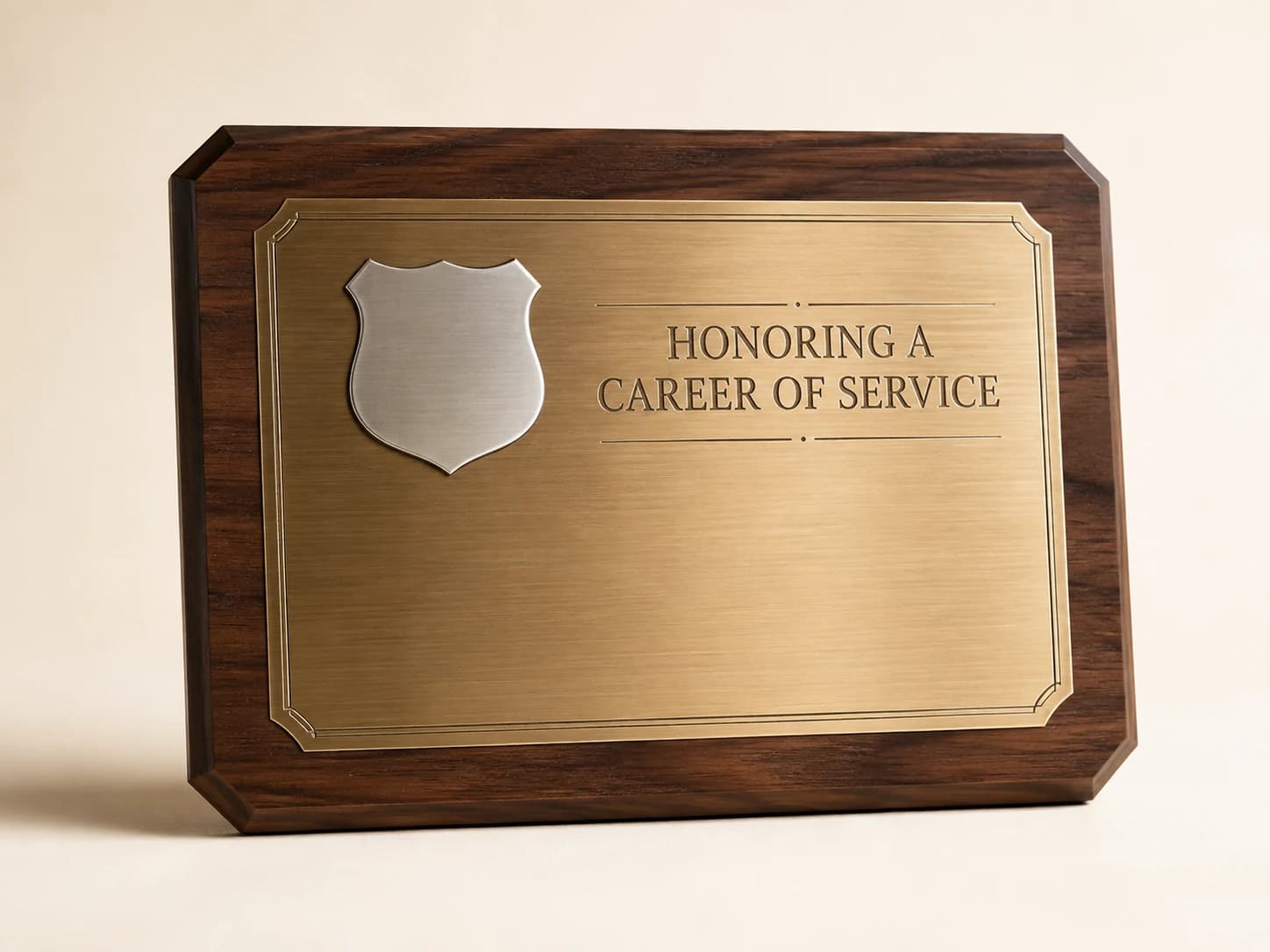

How do you count shared department components outside personal gifts?
A recipient may accept a station or department display piece during the ceremony without becoming its permanent owner. Keep that object on a separate institutional row even if the same person also receives a personal plaque. Record the final custodian and destination.
If several recipients share one board or team recognition piece, count the physical component once and link the relevant recognition context separately. Do not multiply a shared object by the number of people standing beside it in a photograph. The worksheet should make it possible to add the purchased pieces and independently reconcile which items go home with individuals versus which remain with the organization.
Plan one recipient with several law enforcement awards
Load the fictional example, then replace its inputs with the reviewed details for your project.
Method: Multiply the entered units by physical pieces per unit, then add explicitly entered additional pieces and spares. Quantities do not establish eligibility, fit or product inclusions.
Build your plan
Set spares yourself. This calculates the quantities you enter; it does not assume a recommended buffer.
Use the article’s example files
Sample rows are illustrative and are not production instructions. Replace their assumptions, keep private records separately and complete the approval fields before using the sheet for a real order.
How do you pack for the recipient’s sequence without losing award identity?
Assign an item code to every physical piece and include the approved award title in the packing record. If one person receives two awards, decide whether the stage team presents them together or in separate ceremony segments. Packing by recipient can be useful for a combined handoff, while packing by award category may suit a different event sequence.
Keep both relationships visible so the objects can be found without opening every package. If a recipient is absent, the holding record should identify all of their intended pieces rather than treating one collected plaque as completion of the entire set. The count and distribution plan should continue to agree after the ceremony.
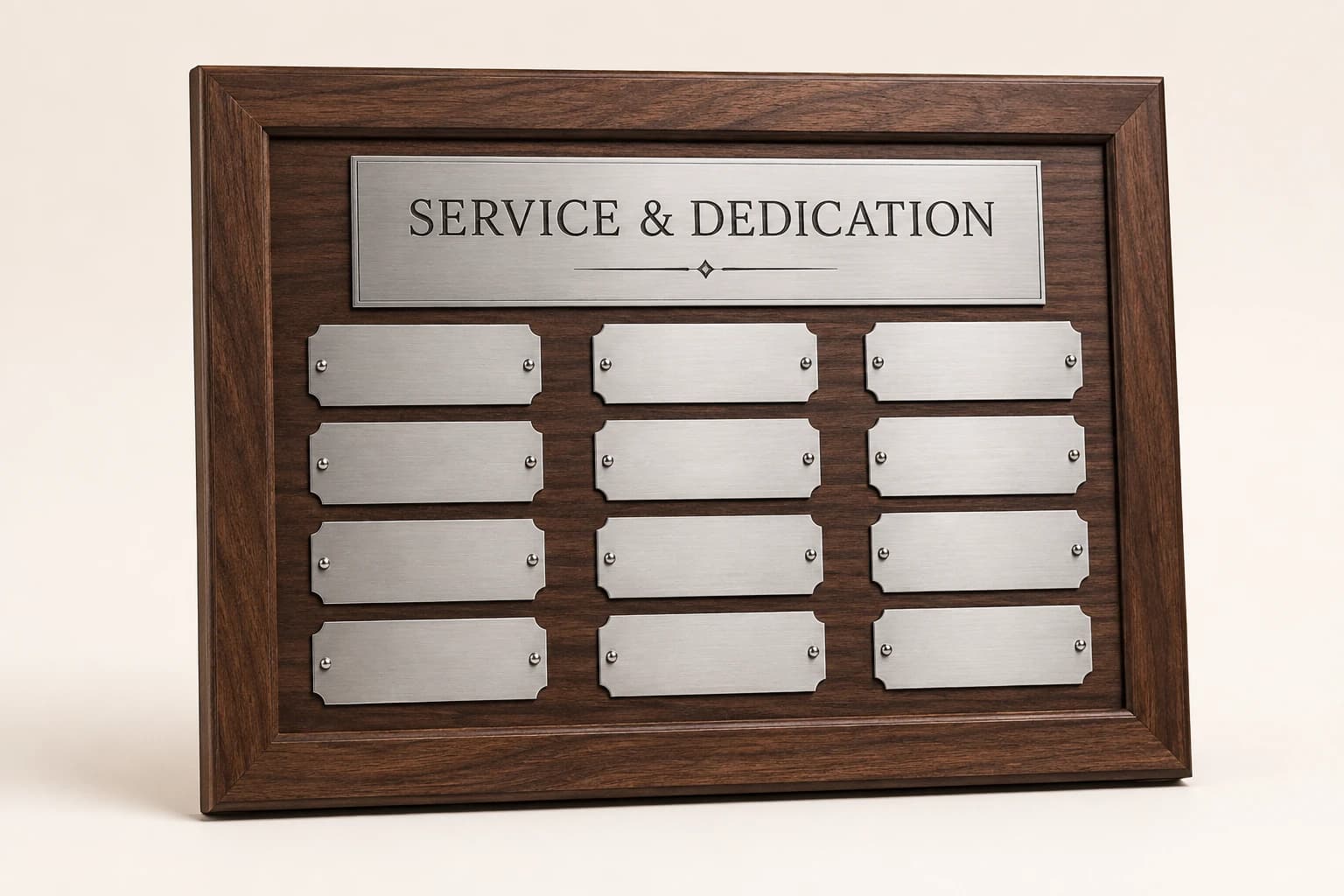
How do you reconcile changes at the object level?
If an award is withdrawn, added or moved to another presentation date, update the specific physical row and its proof status. Do not remove every object linked to that recipient unless the program owner intends that scope. If two separate pieces become one combined design, revise the quantity, artwork and packing record together.
Preserve the earlier plan as superseded so the coordinator can explain why totals changed. At receiving, compare objects against the final item list, then confirm the recipient or institutional handoff for each. The useful completed record shows which physical pieces reached their intended owners, not merely that every recipient’s name appeared somewhere in the delivered order.
How does the illustrative one recipient with several law enforcement awards example work?
A fictional ceremony has three recipients who each receive two separate awards and four recipients who each receive one. That is seven people but ten physical pieces. The coordinator keeps the six pieces for the first group and four pieces for the second group distinct.
No spare is added automatically, and a shared department display would require its own explicit additional row if later approved. Enter three recipients at two pieces each, four additional single-award pieces and zero spares. Three times two equals six; six plus four is ten. The seven-person roster therefore produces ten objects. If one two-award recipient instead receives an approved combined piece, reduce the physical schedule by one and revise the artwork and packing identifiers together. The tool checks the entered count; it does not decide which awards are authorized or whether combining their text is appropriate.
Separate award pieces or Combined presentation piece: which fits this order?
Choose this when distinct titles, authorities or destinations benefit from their own physical objects. Choose this when the organization approves a single layout that clearly preserves the separate recognition meanings. Does each piece have its own approved wording, item code and intended owner?
| Option | Separate award pieces | Combined presentation piece |
|---|---|---|
| Best reason to choose it | Choose this when distinct titles, authorities or destinations benefit from their own physical objects. | Choose this when the organization approves a single layout that clearly preserves the separate recognition meanings. |
| Main review question | Does each piece have its own approved wording, item code and intended owner? | Does the complete design communicate each approved award without inventing a broader title? |
| What to specify | Provide one physical row per object linked to the recipient and award authority. | Provide one physical row with separately approved text sections and a clear presentation plan. |
| Later change | Keep the approved wording and component reference so any later revision can be requested against a known record. Do not assume a photograph alone can recreate the original. | Record which parts remain the same and which would be replaced or updated. Ask for a specific later-change proposal rather than relying on an unconfirmed assumption of interchangeability. |
What should you confirm before ordering?
These Shield Recognition answers address one recipient with several law enforcement awards. Confirm the final wording, component scope and receiving plan in the written proposal. The illustrative worksheet explains the planning calculation; it does not approve the production design or replace the reviewer responsible for this order.
How should a multi-award order be priced and counted?
Ask Shield Recognition to quote the physical pieces, with distinct artwork and construction groups shown separately. Recipient count alone is insufficient when one person receives several objects or a shared display is included. Size, personalization, packaging and shipping affect scope. Confirm any proposed combined piece before reducing the purchasing count or approving its layout.
Does a repeated recipient name mean a duplicate order?
Review the stable internal recipient identifier and intended physical assignments before deleting anything. The same person may legitimately receive several awards, while two people may share one display name. Keep private identifiers in the authorized roster and use neutral item codes in production so every deliberate object can be reconciled.
Can one object represent two different awards?
Propose a combined layout only when the responsible owners approve how both recognition messages appear. Preserve each title and meaning instead of inventing one broad heading. Once the design is accepted, count the physical object once and revise the packing list. Until then, keep the separate-piece plan visible rather than assuming consolidation.
How should a shared department display be counted?
Count a shared physical component once, even if several people accept it together during the ceremony. Record the institution as its permanent owner and identify the custodian. Personal take-home gifts remain separate rows. The number of people shown beside a display does not determine the number of components being purchased.
What changes when one recipient is absent?
Keep all of that recipient’s intended item codes together in the holding record, with an assigned handoff owner. A substitute accepting one plaque does not necessarily complete a multi-piece set. Confirm whether the pieces will be collected or shipped later, and preserve their separate award titles and approved proof references.
Sources and scope
The sources below support the cited technical details. The ordering workflows are editorial recommendations. Your project specification, price and schedule are established in the written quote and approved proof.
Which buying guide should you read next?
All buying guidesFor worldwide Shield Recognition orders, keep a retirement dedication distinct from an official commendation, even when both use a similar plaque.
For worldwide Shield Recognition orders, treat a post-ceremony service-tribute shipment as its own recipient handoff, with a fresh packing check and confirmed destination.