Shield Recognition · buyer guide
Badge-shaped presentation plaques and artwork briefs
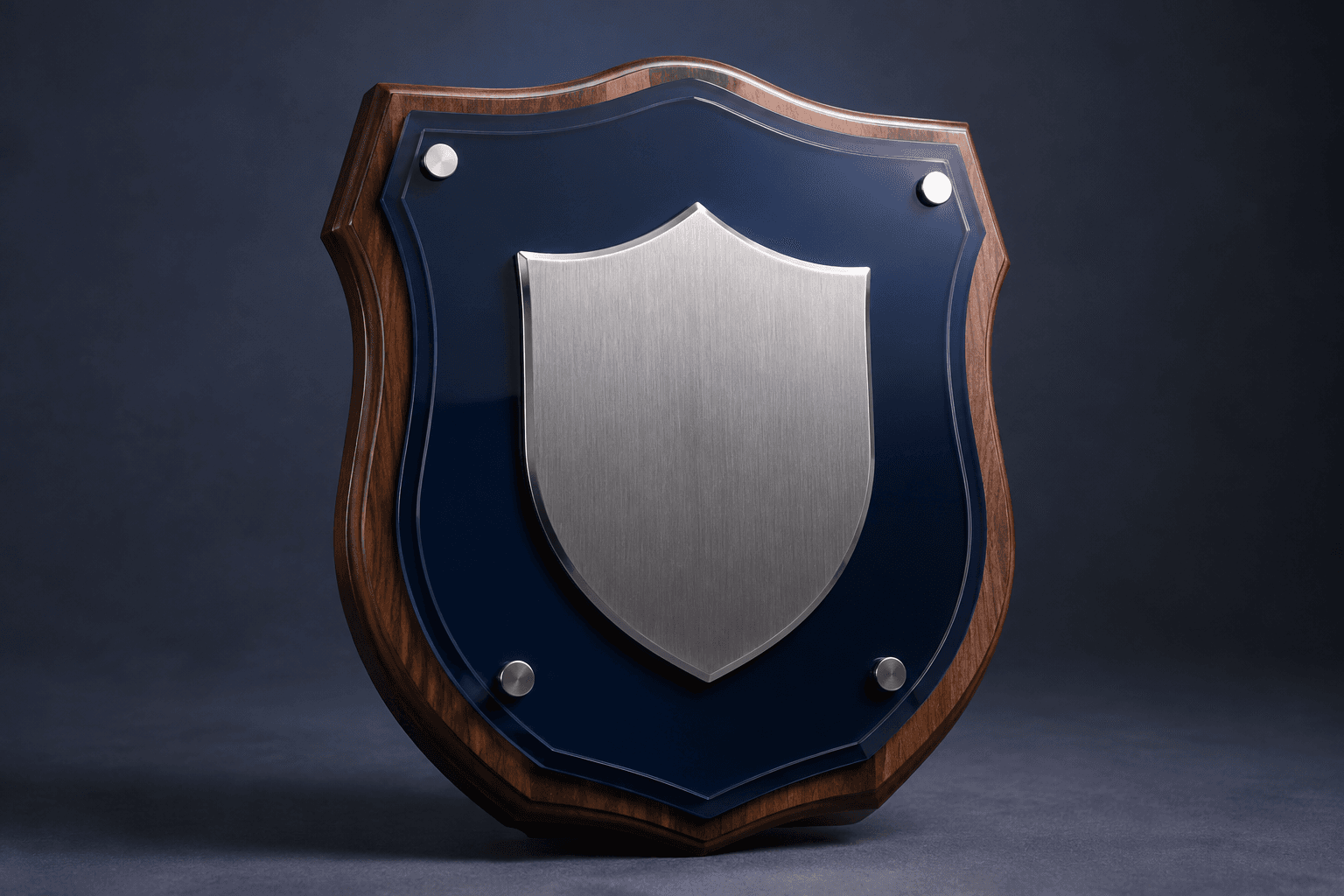
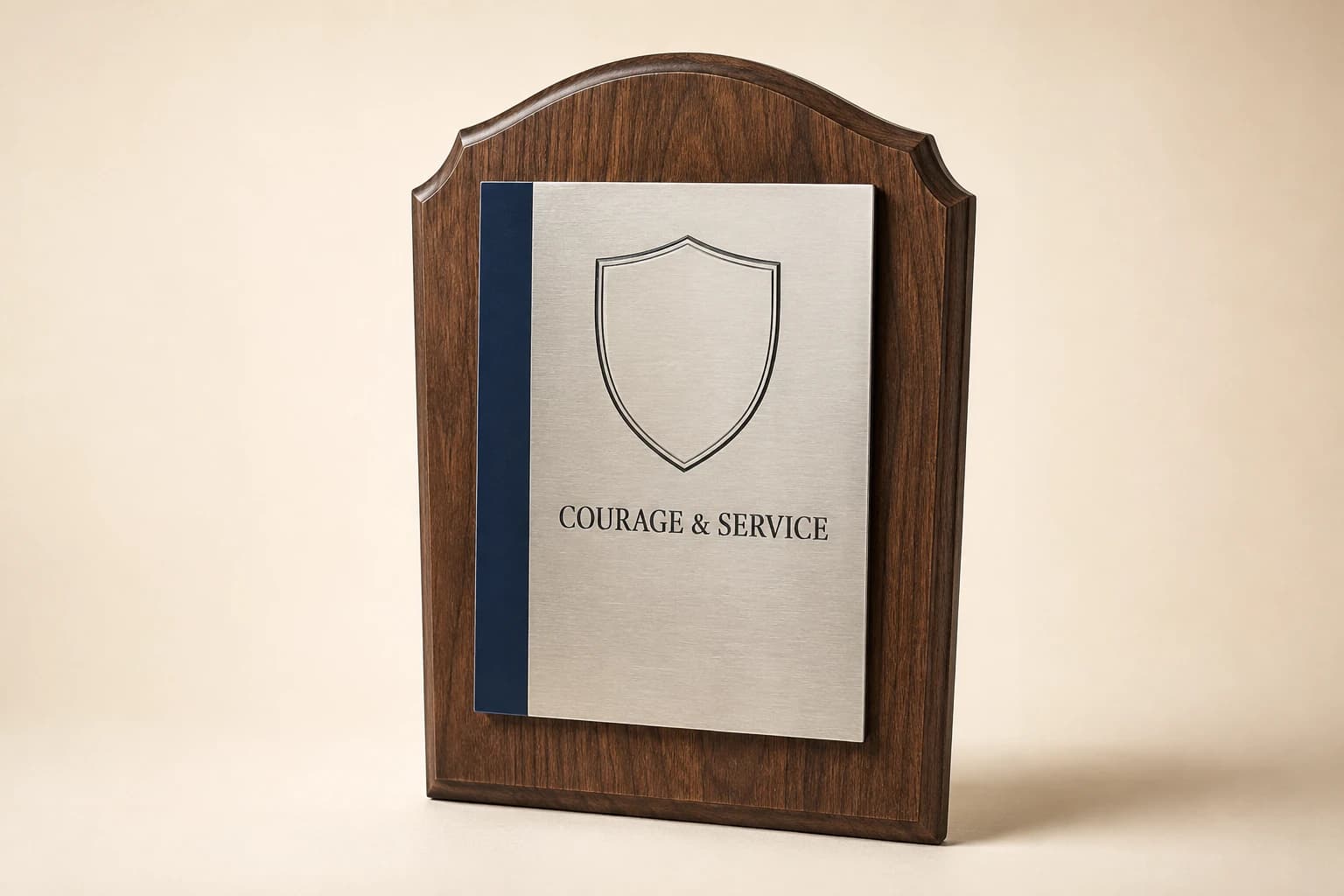
For worldwide Shield Recognition orders, turn a badge-shaped concept into an approved artwork brief without implying that every decorative shield reproduces an official badge. A badge-shaped presentation plaque may use a general shield silhouette, an approved department emblem or a reproduction of an identified badge.
Reviewed 2026-09-05 · AI-assisted editorial review. General buying guidance; illustrative scenarios are not customer case studies. Images are AI-generated concepts.
Ask which interpretation the organizer intends before collecting artwork. These options can look related while carrying different meanings and approval needs. A decorative shield should not be described as the recipient’s actual badge unless that is the authorized design. Conversely, an intended badge reproduction needs a reliable approved reference rather than a generic shape chosen from a product image. State the requested scope in plain language and identify the reviewer responsible for the artwork. This lets the designer develop the concept without inventing affiliation, badge details or official status.
How do you request an approved source file for identifying artwork?
Ask the appropriate department contact to supply the artwork version authorized for this use. Record its filename, revision and any instructions that accompany it. A photograph of a badge may explain the desired direction, but reflections, perspective and wear can make it an unreliable source for small details.
Do not assume that tracing the photograph produces an accurate or authorized reproduction. If the supplied file is unsuitable for the proposed process, ask for a reviewed redraw or an alternate authorized asset. Keep the original reference and the production artwork separate so the reviewer can compare them. The designer should not quietly simplify a seal, change lettering or add a badge number merely to make the layout easier.
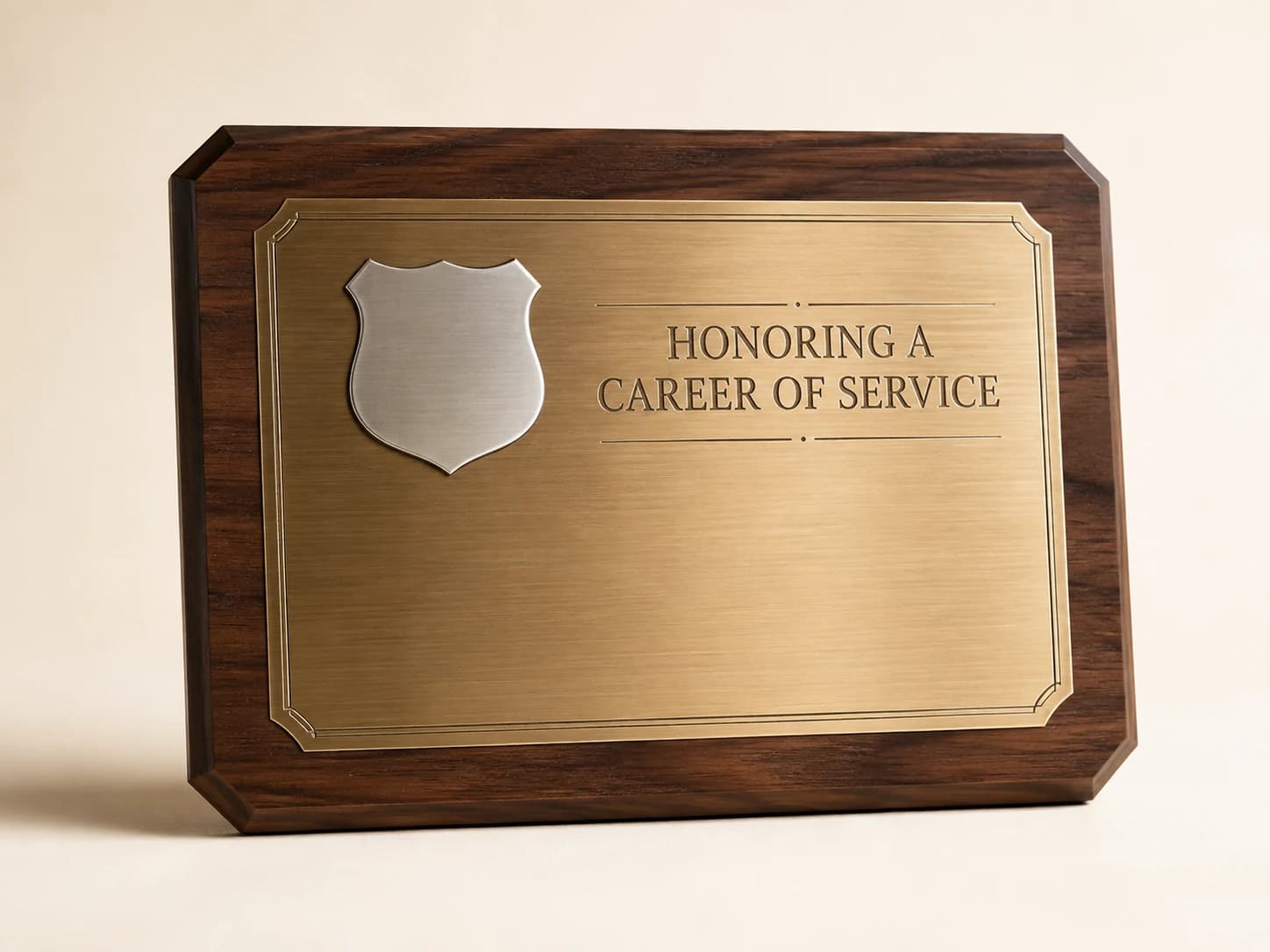
All Time Awards publishes police retirement wording examples.
Sources: All Time Awards: Honor a Lifetime of Service With a Law Enforcement Retirement Plaque
How do you identify the parts that must remain exact?
Ask the artwork reviewer which elements are fixed and which may be adapted for the presentation format. The outline, department name, emblem text and an approved identifier may have different constraints from a decorative border or background. Put those distinctions in the brief.
If the organizer wants the recipient’s name inside the shield, show how it relates to the identifying artwork rather than assuming any empty area is available for personalization. A faithful emblem may need to remain separate from the dedication. Reviewing those relationships early can avoid an attractive composition that unintentionally alters the identity being reproduced. The final proof should make every intended adaptation visible to the person authorized to approve it.
How do you check small details at the proposed physical size?
A badge image can look clear when enlarged on screen while its fine lettering becomes difficult to distinguish on a small plaque. Request an actual-size proof showing the proposed artwork and personalization together. Ask the production team to explain any detail that needs a different treatment in the actual process.
Do not replace a physical review with a universal pixel or character threshold. If a complex emblem cannot be reproduced clearly at the selected size, compare a larger format, a simpler approved motif or a separate emblem area. The authorized reviewer should approve the chosen adaptation. A decorative element should support the recognition rather than consume space that makes the recipient’s name and occasion hard to read.
How do you keep individual identifiers out unless intentionally approved?
A reference badge may include a number or other individual detail that the organizer does not want reproduced publicly. Ask which identifiers belong on this presentation object and obtain the exact approved text. Do not copy every visible number from the photograph or use a placeholder that might be mistaken for a real identifier.
Keep private background information in the restricted project record. If the ceremony will be photographed, have the organizer review the actual visible artwork and inscription in that context. The purpose is not to create a new policy through the engraving order; it is to ensure that the supplied production brief reflects the organization’s intended public design.
How do you specify the complete plaque around the approved artwork?
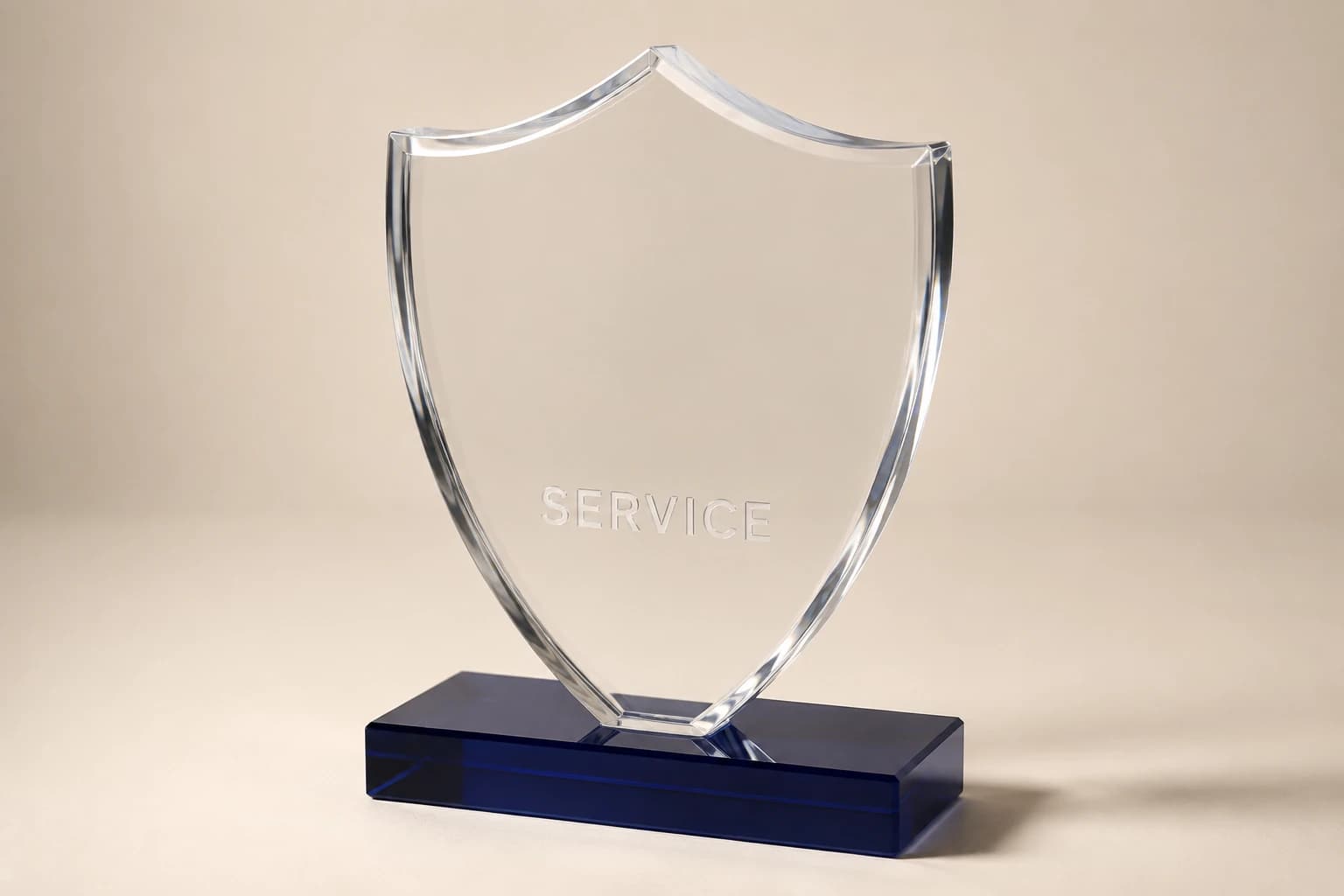
Once the artwork direction is settled, describe the complete object: overall shape, inscription area, desired display orientation and any included stand or presentation packaging. A badge-shaped face is not a complete specification for the base or support. Ask the supplier to distinguish included components from optional elements shown in the concept.
If the plaque is intended for an existing holder or wall location, provide the actual measurements and obtain the relevant project-specific review. Do not infer mounting suitability from the silhouette alone. The component proposal and the artwork approval should refer to the same final design so a change in size or orientation does not invalidate the earlier detail review.
Use the article’s example files
Sample rows are illustrative and are not production instructions. Replace their assumptions, keep private records separately and complete the approval fields before using the sheet for a real order.
How do you save the approved artwork relationship for future copies?
Retain the authorized source asset, final production artwork and complete proof. A later copy should not be recreated from a compressed ceremony photograph if the approved file is available. Record whether the design uses a decorative shield or an actual approved badge reference so a new coordinator does not mislabel it.
If a department emblem changes, decide whether a historical gift should retain the original version or receive an authorized update; do not substitute the current logo automatically. At receiving, compare the small identifying details as well as the recipient name. The finished piece should match the specific artwork decision the organizer approved, not merely resemble a badge at a glance.
How does the illustrative badge-shaped presentation plaques and artwork briefs example work?
For a fictional presentation set, six badge-shaped plaques are required, with two separate approved display pieces for a departmental room. No spares are requested. The quantity plan counts eight objects, while the artwork brief distinguishes the personal plaque treatment from the room-display version.
The same approved emblem source can be referenced without assuming the two layouts or physical sizes are identical. Enter six personal plaques at one object each and two additional room displays, with zero spares. Six plus two equals eight physical pieces. The artwork worksheet keeps the approved source file, intended identifier treatment and physical format attached to each group. If the room displays use a different emblem size or inscription, they require separate proof references despite sharing one source asset. The quantity result does not authorize artwork or confirm that a badge-shaped concept includes every component shown.
Optional calculation: Plan badge-shaped presentation plaques and artwork briefs
General shield motif or Approved badge artwork: which fits this order?
Choose this when a decorative shape supports the tribute and an exact official badge reproduction is unnecessary. Choose this when an authorized identifying design is central to the presentation. Is the design clearly described as a motif, with no invented department or individual identifiers?
| Option | General shield motif | Approved badge artwork |
|---|---|---|
| Best reason to choose it | Choose this when a decorative shape supports the tribute and an exact official badge reproduction is unnecessary. | Choose this when an authorized identifying design is central to the presentation. |
| Main review question | Is the design clearly described as a motif, with no invented department or individual identifiers? | Has the responsible reviewer approved the source, adaptations and actual-size detail treatment? |
| What to specify | Specify the approved silhouette, dedication area and complete object scope. | Supply the authorized asset, fixed elements, permitted adaptations and full proof with personalization. |
| Later change | Keep the approved wording and component reference so any later revision can be requested against a known record. Do not assume a photograph alone can recreate the original. | Record which parts remain the same and which would be replaced or updated. Ask for a specific later-change proposal rather than relying on an unconfirmed assumption of interchangeability. |
What should you confirm before ordering?
These Shield Recognition answers address badge-shaped presentation plaques and artwork briefs. Confirm the final wording, component scope and receiving plan in the written proposal. The illustrative worksheet explains the planning calculation; it does not approve the production design or replace the reviewer responsible for this order.
What changes the price of a badge-shaped plaque?
Shield Recognition proposals should identify cost per finished plaque, artwork preparation and any separately priced display components. An approved emblem redraw, different sizes, added bases, packaging and destination can affect the total. Compare the complete written scopes; a badge silhouette alone does not tell you what physical pieces or artwork work are included.
Is a shield motif the same as an official badge?
A general shield can be a decorative motif, while an official badge reproduction refers to an identified approved design. State which one the organizer wants and who approves it. Do not add department names or individual identifiers to make a generic shape appear authentic without the appropriate source and authorization.
What artwork should we send first?
Send the version supplied or approved by the responsible department contact, with its filename and any use instructions. A photograph can explain the concept but may contain perspective, reflections or unclear detail. Ask for a reviewed production asset rather than assuming a tracing is accurate or that every visible identifier belongs on the gift.
What if small emblem details will not reproduce clearly?
Ask for an actual-size proposal showing the detail treatment in the intended process. Compare a larger format, an approved simplification or a separate emblem area. The authorized artwork reviewer should select the approach. A clear enlarged screen image does not establish that fine lettering remains readable on the finished plaque.
Does the concept include a stand and presentation box?
Only the written proposal establishes the included components for this order. Ask it to identify the plaque face, base or stand, any attached decorative element and packaging. A product image may show a complete arrangement for illustration, so resolve the physical scope before comparing totals or preparing the receiving checklist.
Sources and scope
The sources below support the cited technical details. The ordering workflows are editorial recommendations. Your project specification, price and schedule are established in the written quote and approved proof.
Which buying guide should you read next?
All buying guidesFor worldwide Shield Recognition orders, keep a retirement dedication distinct from an official commendation, even when both use a similar plaque.
For worldwide Shield Recognition orders, specify replacement service-board plates from the actual board, position and approved historical text.